Related Posts with Thumbnails
Showing posts with label Knowledge Management. Show all posts

Wednesday, May 21, 2014

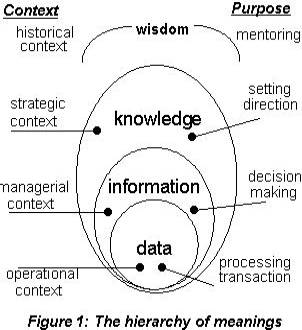
Information, information everywhere but not a drop to sync!!!

Here are two articles relating to information access (and the hassles that come in the same package). This is a telling tale of haves, who have to go thro' hope, resiliency, perseverance and much more (if they are not bored) in making their ends meet!!! Can you hear me now? :


  • Locked in the Ivory Tower: Why JSTOR Imprisons Academic Research. By Laura McKenna, theatlantic.com : Universities have to pay thousands of dollars every year to read their own research online. Blame the broken economics of academic publishing.
  • The solutions to all our problems may be buried in PDFs that nobody reads. BY CHRISTOPHER INGRAHAM, washingtonpost.com : One final irony to ponder: You know that World Bank report, about how nobody reads its PDFs? It's only available as a PDF. Given the attention it's receiving, it may also be one of their most-downloaded reports ever.
    (image courtesy: novamind.com)
  • Sunday, December 01, 2013

    Addressing The Demographic Challenge Of Knowledge Management

    Addressing The Demographic Challenge Of Knowledge Management  
    Manufacturing.net   Nov 18
    Extract:
    When a large manufacturer calculated how much they could save by consolidating operations, they didn’t count the true cost of closing a location a few states away that had a 90-year history and hundreds of skilled employees. The oldest, most expert employees took early retirement. The mid-level employees, the company’s intellectual backbone, took their expertise to a competitor, rather than ...

    These new systems are being built around these key ideas:
    • Active and agile knowledge. The old knowledge library paradigm is too static. Knowledge is active, alive and has greatest value when used. It must be accessible, useful and relevant. Engineers don’t have time to stop what they are doing to dig for a manual — assuming they know where to look in the first place. Knowledge must push to workers in context.
    • Accessible, complete and current knowledge. Knowledge is stored in a variety of disconnected documents that quickly fall out of date. An engineer may not have time to search for specification documents, best practices presentations and various spreadsheets of data. And if he grabs old parameters without realizing they are outdate, he may invest hours in a solution that is totally out of specification. Systems must make it easy for users to access a complete and current knowledge.
    • Make knowledge capture part of the process. If people don’t have time to go search through documents, they surely don’t have time to create them. Efforts can vary in quality, depending on who creates them. Capturing knowledge, evaluating it, refining it and updating it has to be an organic part of the workflow — or it simply will not happen.
    • Structured flexibility. Knowledge takes many forms and is used in many ways. An engineer might need materials specifications, dimension measurements, picture maps, work instructions and interdependency schedules to design a part. The system must be flexible and able to completely capture and structure that content for access and reuse.
    • Reward knowledge contributions. Some people fear sharing their knowledge will make it easier to ship their job to China. Others take genuine pride in being the go-to person when someone has a question. A well-managed knowledge system uses such cultural issues to motivate, recognize and reward people for contributing. They create a virtuous circle of engagement, trust and use, with practical rewards that encourage more engagement and more use.

    Tuesday, August 20, 2013

    Organization of Islamic Knowledge by Haroon Idrees

    Found two intensive research articles  on  the subject, both by by Haroon Idrees @ Academia.edu:
    About Haroon Idrees: IRI, International Islamic University, Islamabad, Pakistan, and  Berlin School of Library & Information Science, Humboldt University of Berlin, Berlin, Germany.

    On the same shelf:

    Tuesday, July 23, 2013

    Google's Gmail and Personal Knowledge Management: Whatz Up in 2013


    Is The New Gmail Better For Users Or Marketers? By WebProNews
    Extract:
    "You can go to the gear icon, and click “Configure inbox” to set up the new style if Google hasn’t pushed it to you.
    The main difference is that the new interface separates your emails into different tabs. There are tabs for: Primary, Social, Promotions, Updates and Forums. You’ll probably get the first four by default, but you can adjust the settings to have whatever combination of these you want, including only Primary, which would make your inbox more like the classic Gmail.
    Primary, according to Google, is reserved for messages from friends and family, and other messages that don’t appear in other tabs. Promotions is where deals, offers and other promotional emails reside (like email marketing messages from lists you’re subscribed to). Social is where you will see messages from social networks, media-sharing sites, online dating services, gaming platforms and other social sites. Updates is where you will find notifications like confirmations, receipts, bills and statements. Forums will include messages from online groups, discussion boards and mailing lists." continue reading Web Pro News.

       See also:
  • Google's Gmail Promises Personal Knowledge Management Online (2004) http://contentblogger.shore.com/
  •   How Nonprofits Can Navigate Gmail TabsBeaconfire Consulting 
  • What Do Users Think Of Google’s New Look? webpronews.com 
  • Tuesday, December 25, 2012

    Using SharePoint for Legal KM

    Jennifer McNenly, Event Host

    Talk: Recorded Live
    About the exploring the role of the knowledge worker in the modern social-media savvy enterprise
    Using SharePoint for Legal KM, Slideshare

    Organized by knowledge workers, October 20, 2010, Toronto

    Monday, October 15, 2012

    Records Management and Knowledge Mobilisation -- Reading now

    Records Management and Knowledge Mobilisation: A Handbook for Regulation, Innovation and Transformation, by Stephen Harries. Chandos Publishing (Oxford) Ltd / Woodhead Publishing -- Distributed in the US by Neil-Schuman Publishers (2011). ISBN-10: 1843346532
    About the Book:
    Over the last 15 years, records managers have tackled problems of electronic information and built a strong case for information governance based on a model of regulation and management control. The public sector environment is now changing rapidly, with more emphasis on efficiency, flexibility, loosening regulation, and cutting budgets. This book shows how records management can continue to contribute to public sector reform and transformation in this new climate. By linking practical ideas about the use and management of knowledge, Harries draws on insights from the study of policy-making and program delivery to show how managing the relationship between records and knowledge and their creation and use can thrive and reconcile the demands of regulation through a wider concept of the governance of knowledge and information.


    CONTENTS:
  • Managing records and growing knowledge: an interactive strategy
  • Records management in a turbulent world
  • The turbulent world of records management
  • What is knowledge mobilisation?
  • Connecting records management and knowledge mobilisation
    PART 1: PRINCIPLES
  • The changing role of government: transformation
  • Concepts, codes and meanings: bridging knowledge and records
  • Records, knowledge and action: an interacting design model
  • Regulation and institutions: rules, roles and frames
  • Innovation and change: ideas, networks and communities
    PART 2: PRACTICES
  • Bridging policy and delivery with knowledge: the case for intervention
  • Achieving added value: efficiency, effectiveness and public value
  • Planning a knowledge-based intervention: strategy, tools, analysis
  • Fomenting knowledge development: plans, techniques, architecture
  • Reframing records management: towards knowledge governance
  • Structural change in the public sector
  • A strategic role for knowledge governance
  • Monday, October 01, 2012

    Using Google Power Tools for Gathering Competitive Intelligence

    "Gathering information about competitors can be relatively easy if you know where to look and what you're looking for, according to competitive-intelligence professionals." David Gibson, co-ordinator of the Toronto chapter of the Society of Competitive Intelligence Professionals (SCIP).
    Interestingly, Google search is now the leader in helping you find what you want, when you want. It is no more a simple link finder--if one remembers those days when Yahoo and Hotbot were the market leaders in vertical searching, and Google was no where. Google is no more a competitor with any of those who tried their best to Bing or whatever (let alone its once proposed partner: Yahoo).

    Google keeps adding power tools. Other than the general purpose of a search engine, some of these Google's tools are a powerful aid in gathering Web analytics (e.g., search within links, domain, titles, subject, etc.), some for gathering competitive intelligence / market research (see examples, below), so on and so forth. Additionally, Google AdWords, Google Analytics, and many more Google applications are a major attraction for techies.

    Google as a power search tool helps you in finding facts, figures and data. And the example here is finding competitive intelligence on any given subject. The list of tools Google offers includes (located in Google's vertical sidebars or in the main menu):
  • Trends on a subject of example Market Research
  • News on the subject of market research in the last 24 hours (you can change the time, if you like)
  • Images, that are limited to a subject of your choice, e.g., Market Research--you can change to default results, i.e., relevance
  • Limiting search to a specific Domain name, e.g., .biz, and market research
  • Discussions, on Market Research
  • Finance in relation to market research -- one can limit to related companies
  • Books (with a free preview option), for example on Market Research
  • Chel Wolverton - Google Reader - Public - Questions to Ask Competitive Intelligence Software Providers - Cooperative Intelligence
  • 5 Lonely Google Applications For Competitive Intelligence, By Ian Smith
  • Business Intelligence vs. Competitive Intelligence, Jan Steyl
  • Culture of secrecy keeping Canadians in the dark, Toronto Star
  • On the same shelf:

  • Sunday, May 15, 2011

    Libraries and the Knowledge-Based Economy, Dr. Abdus Sattar Chaudhry

    Guest Editoial, Dr. Abdus Sattar Chaudhry, Pakistan Journal of Library & Information Science (PJLIS), Issue No. 11, 2010
    Extract:
    Libraries have been dealing with documents and external information while KM places emphasis on internal information and people. KM focuses more on tacit knowledge that resides in employees. A unique mix of technological, psychological, and communication skills is required for performing KM functions. Libraries have the potential to play an important role in supporting KM functions. Their client-centered approach, emphasis on service, and experience in efficiently running information systems make them ideal candidates for providing support in knowledge management work. Library managers, however, need to change their mind-set and expand their competencies by enhancing their communication and leadership capabilities to become active participants in the knowledge creation and application processes. To reach this level, concurrent efforts at individual, professional, and institutional level will have to be made to reposition libraries. There is also a need to re-orient library and information (LIS) professionals to take advantage of the new opportunities. Continue reading

    On the same shelf:

    Sunday, March 20, 2011

    Time For KM To Manage Knowledge About Management?

    Steve Denning, RETHINK - Forbes, Mar. 18 2011
    EXTRACT:
    The bottom line of these discussions is that the horizontal, collaborative, value-adding principles of knowledge management are barely compatible with the top-down, bureaucratic, efficiency driven preoccupations of traditional management. Even KM programs that by all measures are doing well and enjoy significant top-management support are still at risk. In any efficiency or cost-cutting drive, knowledge management will usually be seen as “a low hanging fruit.”

    The practical options for a knowledge manager in the light of this are as follows:

    * Wear a parachute at all times. One never knows who will wield the axe or when it might fall.
    * Educate yourself about the nature of traditional management and realize that there is a fundamental difference in values.
    * Make sure that your knowledge management operation meets all the metrics and responds to the efficiency concerns of traditional management.
    * Learn about how some organizations are managing themselves in a radically different way that is compatible with knowledge, as discussed in, The Leader’s Guide to Radical Management: Reinventing the Workplace for the 21st Century as well as other books such as The Power of Pull by John Hagel, John Seely Brown and Lang Davison, or Reorganize for Resilience by Ranjay Gulati, or The New Capitalist Manifesto by Umair Haque, or Leadership in a Wiki World by Rod Collins.
    * Join together with allies both inside your organization and outside. You may well find that there are groups already practicing radical management within your organization in software development (under titles like “Agile”, “Scrum”, “Kanban”) or in manufacturing (under the title of “Lean”).
    * Spread knowledge about radical management within your organization. We now have reliable knowledge that traditional management is leading to disastrous long-term business result. The extraordinary financial gains that come from making the shift to radical management (e.g. ten times increments in share price over ten years) will far outweigh the gains from any other knowledge that KM can disseminate. ... continue reading

    Monday, February 15, 2010

    Knowledge Management Explained in Five Disciplines

    By Tim Wieringa @ Green Chameleon.
    Extract:
    Here is a suggestion to split Knowledge Management into five disciplines.
    One: Information Management & Search
    Examples:
    * knowledge libraries in large corporations that allow global access to documents across departments and subsidiaries
    * social bookmarking tools that classify websites and allow other users to share them
    * search engines that are indexing vast collection of documents and websites
    Two: Collaboration
    Examples:
    * contact relationship management (CRM) tools that efficiently share and store relevant information to customers, suppliers, and business partners
    * corporate wiki tools that allow the capturing of experts’ knowledge and allow collaboratively develop this knowledge
    * project management tools that allow disperse teams to share information, have discussions, and manage tasks & deadlines
    Three: Workflow Definitions
    Examples:
    * the right design of a costumer complaints process can ensure that the sales departments receives more information about the customers and the research & development department gathers important input on how to improve the products
    * project management methodologies can include processes to capture project reports which are automatically shared in a knowledge library
    Four: Networking
    Examples:
    * social networking platforms allow to publish a personal profile, exchange thoughts, and keep in touch with colleagues and friends
    * in online discussion forums questions are answered by a broad community; the answers are then available for the entire community for future reference
    Five: Training & Learning
    Examples:
    * corporate induction seminars gathers all newcomers in a company at one time and provide them an introduction at the same time; this could also be done with e-learning tools
    * professionals in a specific field of interest gather regularly in conferences to exchange their latest findings and discuss about it
    * training programs for ‘Efficient Meetings’ (just as an example) can be conducted in two parts: a) a brief introduction to the latest findings for this topic, b) a discussion among the participants on how these findings could be applied in their environment. Continue reading: KM in Five Disciplines

    Saturday, January 30, 2010

    What I learnt about Communities of Practices - a conversation

    By Abdul Jaleel Tharayil Venue: Indian Institute Of Science - Bangalore Date: Jan, 2008 ...


    About the speaker: Mr. Abdul Jaleel Tharayil is working as Senior Manager - knowledge
    Management, MindTree Consulting Ltd, Bangalore. [Source taken from Session invitation]

    Sunday, September 27, 2009

    Visualization Technology for Knowledge Mapping

    You can use any tool for KM, including GPS, Flicker, oops: Flickr, to communicate your ideas, concepts, plans, routes, etc. See some samples below:


    See on the same shelf: evocative-knowledge-map

    Sunday, September 20, 2009

    Laws of knowledge management


    • Seven spiritual laws of successful knowledge management, by Marcus Speh Birkenkrahe [1. The Law of Unity; 2. The Law of Giving; 3. The Law of Cause and Effect; 4. The Law of Least Effort; 5. The Law of Intention and Desire; 6. The Law of Detachment; 7. The Law of Purpose in Life]

    • Are There Laws of Knowledge Management? by Stephen Denning, Michel Pommier and Lesley Shneier. [1. Knowledge sharing is essential to economic survival; 2. Communities of practice are the heart and soul of knowledge sharing; 3. Virtual community members also need physical interactions; 4. Passion is the driving force behind communities of practice; 5. Communities enrich organizations and personal lives; 6. Knowledge sharing has inside-out and outside-in dynamic.
      These six “laws” of knowledge management have three corollaries which are found across a very large number of organizations: Knowledge sharing is at some point confused with IT; Middle-management resists; Vibrant communities of practice attract new talents]

    • Five Laws of KM, by
      Inspired by Dr.S.R.Ranganathan!

      Knowledge is for use;
      Every bit of knowledge its user;
      Every user his/her bit of knowledge;
      Users time is precious;
      Knowledge and knowledge centres are growing organisms.
    • RANGANATHAN REVISITED: FACETS FOR THE FUTURE, ISKO UK meeting: Connecting communities: Content, knowledge, information: Same Difference?

    Tuesday, March 03, 2009

    Capture, store, and share information - Sounds old rhyme, right?

    But now this story is getting newer interface (call it interface 2.0). Thanks to Martha for sharing the info about the Living Library!!! I Googled to see true colors of the LL, and found the following:

    Living library idea as a knowledge managment tool
    by Shaunna Mireau on October 30th, 2008
    A recent article in Library Journal caught my eye: “Living Library” Debuts in Santa Monica1 As the article explains the living library movement invites library users to ‘book’ meetings with individuals with special interests, beliefs or experiences.

    Extract: Wouldn’t it be interesting to add information to the library catalog with the following model:

    Title: Vicarious liability
    Author: Partner X
    Physical Description: 6′1″, folio [individual will come to your office or lunch for a discussion of the title topic].

    Seriously though, there are many ways to formalize tacit knowledge transfer that already happens in informal ways. It is neat that this kind of tacit transfer is being encouraged by public libraries. If a public library can work with this model, our expertise filled organizations can too.continue reading

    See also on the same shelf:


    Saturday, February 21, 2009

    Sharing Tacit Knowledge: A Case Study in the Australian Film Industry


    Tacit Knowledge
    “Explicit” or codified knowledge refers to knowledge that is transmittable in formal, systematic language. On the other hand, “tacit” knowledge has a personal quality, which makes it hard to formalize and communicate. Tacit knowledge is deeply rooted in action, commitment, and involvement in a specific context (Nonaka, 1994, p. 16)
    Irit Alony and Greg Whymark, Central Queensland University, Rockhampton, Australia and Michael Jones, University of Wollongong, Wollongong, Australia Informing Science Journal Volume 10, 2007
    Abstract:
    This paper explores tacit knowledge sharing. This case demonstrates the significance of knowledge sharing to organizational performance, by exploring the contribution of tacit knowledge sharing to the success of projects in the Australian Film Industry (AFI). The differences between knowledge sharing, collaboration and communication, and their interrelations are addressed. We also explore the concepts of knowledge, information, and data. In the interchanges reported here the knowledge shared is almost entirely tacit, and the “raw” data and information do not exist without the context that makes them knowledge. The paper includes the identification of many factors affecting knowledge sharing, not all of which have been identified by previous researchers.

    This research contributes to a better understanding of tacit knowledge and how that knowledge is shared. This in turn contributes to a better understanding of how knowledge management can be supported in a modern organization, where often the technology is used in ways not well understood by system managers and software developers. A better understanding can lead to better ICT design and support of knowledge sharing both within and across organizations.
    Keywords: Knowledge Sharing, Film Industry, Tacit Knowledge, Qualitative, Collaboration.
    See also on the same shelf:

    Tuesday, February 10, 2009

    The Future of the Future: Rise of the Knowledge Librarian

    AIIM > Infonomics Magazine > KM World (02/02/09) Murray, Art and Wheaton, Ken
    "Both the private and public sectors have been steadily downsizing and closing their physical libraries. All those serials and monographs, outdated by the time they arrived from the printers, are simply not that competitive anymore."

    Extract: Delivering knowledge vs. information
    "Corporate librarians used to devote years acquiring and cataloging physical document collections. All those serials and monographs, outdated by the time they arrived from the printers, are simply not that competitive anymore. Knowledge is not static. It must be continually refreshed through venues such as open discussion and brainstorming. That calls for a new kind of library."

    "...Unfortunately, there have been casualties. Librarians are being jettisoned along with the bookcases. We need to reverse that trend and start bringing them back … but only the ones who are willing to change. A traditional corporate librarian must make three major shifts in roles begin the transition to a knowledge librarian."

    • Role shift #1: A knowledge librarian should be the "content czar" of the enterprise.
    • Role shift #2: A knowledge librarian understands the strategic information needs of the enterprise.
    • Role shift #3: A knowledge librarian is a lead agent of change.

    “The librarian of the future is uniquely positioned to be at the center of the creation and alignment of intellectual assets across the enterprise. That leads to improved innovation and business performance on a sustained basis. Maybe the time will soon come when we will see librarians as CKOs.” continue reading

    Saturday, October 25, 2008

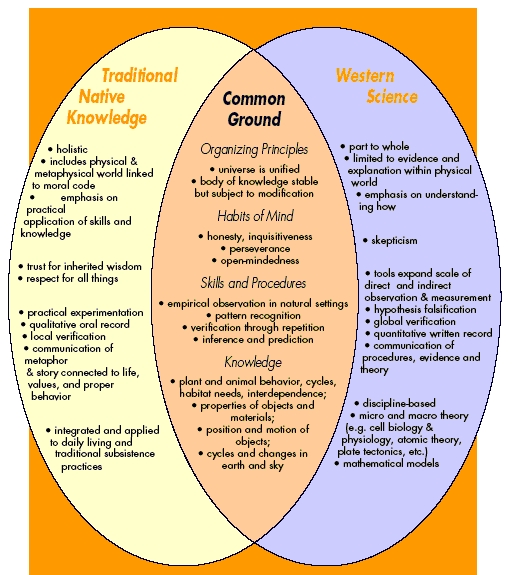
    Knowledge Management of Local / Indigenous Traditions for a Globalized World


    The books in the above slide, and following resources may give some sources for reflection on what works and where it works:


    From the Handbook for Culturally-Responsive Science curriculum by Sidney Stephens, 2000. Available from the Alaska Native Knowledge Network.

  • Seeking Future Alaska Native PhDs!
    by Ray Barnhardt and Oscar Kawagley
  • Compensating forest-dwelling communities for drug the work of the Healing Forest Conservancy, by K. Moran
  • Infancy of Tools in the Identification of Native Knowledge, by
    Dr. Lalitha Aswath & Rupesh Kumar A.
    full article

  • Resources - Links: Local or Indigenous Knowledge @ Profit From The Application Of New Knowledge Pattern Recognition Research To Your Business: The Kaieteur Institute For Knowledge Management.

  • Focal Area: Status of Traditional Knowledge, Innovations and Practices
  • Knowledge Management and Indigenous Knowledge: MS Word file Information and Communication Technologies, Knowledge Management and Indigenous Knowledge: Implications to Livelihood of Communities in Ethiopia, by Lishan Adam, PhD, ICT in Development Researcher, Lishan@ictfd.net
  • Indigenous knowledge, the library and information service sector, and protocols. Publication Date: 01-JUN-05, Australian Academic & Research Libraries,
    Author: Nakata, Martin ; Byrne, Alex ; Nakata, Vicky ; Gardiner, Gabrielle
  • AUSTRALIAN INDIGENOUS KNOWLEDGE AND LIBRARIES PDF file

    See on the same shelf:
  • Vertical and tacit: Multifaith and Knowledge Management in Perspective
  • Knowledge Management Applications in Multifaith & / or Multicultural Transactions Revisited
  • Sunday, October 12, 2008

    Which flavour does knowledge have on the web?

    In recent debates within the KiWi - Knowledge in a Wiki project, the need arose to further refine and find a common understanding of the type of knowledge that is (ideally) managed and processed using (semantic) wikis. One of the proposals evolved around a conceptualization of knowledge put forward by Gabi Reinmann-Rothmeier, also dubbed the “Munich Modell” (Münchner Modell).

    In the Munich Modell, knowledge comes in three states of matter: solid (like ice), liquid (like water) and gas (like water vapor).

    “Frozen” knowledge is knowledge in its most tangible, manageable form, for instance the type of verified, expert-endorsed information you would find in an encyclopedia like the Encylopedia Britannica.

    “Gaseous” knowledge, on the other hand, is knowledge in its least consolidated form: think for instance of the type of heated debate you might have with folks in a pub, which is arguably the least structured, most uncontrollable, but also the most engaging type of knowledge!

    And the “liquid” form of knowledge, eventually, is the common knowledge of day-to-day-life. It’s probably fair to say that it becomes obvious mostly when in the process of changing its state of matter: When it is calibrated against “frozen” or informational knowledge or when it is debated, becomes “gaseous” knowledge that informs action. (If you’d like to know more about the Munich model and are able to read German, you might want to download the original article here - PDF, 365 KB). continue reading @ The Semantic Puzzle

    Wednesday, October 08, 2008

    How do you describe this industry, and what you do, to your family and friends?


    Posted by Bryant on September 30, 2008 in Infonomics: Question of the Week
    View Discussions
    "I don't know about all of you, but describing this industry to those not in it can be . . . interesting. How do you convey what you do?" continue reading

    PS: I would call this, if I am asked to, as Information Industry or Knowledge Management.

    *Infonomics is a new title of a journal (formerly called AIIM E-DOC Magazine); see also: Knowledge Management - The Next Generation @ TakingAIIM blog

    Saturday, September 06, 2008

    ROI for the knowledge worker is ROI for all, and how KM took an ironic approach

    "I perpetually point out the difference to the old and new KM in this blog, but I’ve never thought of it in terms of ROI for the knowledge worker. I have only thought of this in terms of the incentive and motiviation for knowledge sharing. When you think of the big picture of the need for a return in knowledge sharing, we can say this is the ROI for the knowledge worker.

    My thought are if the ROI for the knowledge worker is high, ie. high reciprocation of value for participating, then in aggregate the enterprise ROI from a social computing ecosystem will be high.

    The old KM was not about people, it went for the knowledge as a separate thing, and knowledge as a separate act approach, where the participants really had no return on their contributions, and no self motiviation to want to participate. In essence this process didn’t blend with human nature at all. Plus there is the other end of naturally seeking know-how off people, that’s just it, you were meant to seek it from a database (not people), and what you find, if you do find something relevant is meant to be context objective so it will suit all needs.

    Whereas the new KM is not really KM at all (considering the key to KM is sharing what’s in our heads), it’s not a separate act, it’s embedded into our regular routines. In an ecosystem where we are networked to people and we participate as we do our work, as well as the finished product of our work, there is no conscious effort to make sure you are sharing your know-how, it’s just happening from being, just like in the offline world. In the offline world I don’t make sure I’m sharing know-how, it’s just blended into how I am as a person, it comes out when I act and speak whether I like it or not...." continue reading: John Tropea @ Library clips

    Labels

    Best Practices (76) Knowledge Management (56) Communities of Practice (50) Information Management (47) Business Intelligence (35) Competitive Intelligence (33) Knowledge Organization (28) Communication (24) Librarians (16) Professional development (15) Library (14) Semantic Web (13) Wiki (11) Education (10) Search Engines (8) Special Library Association (8) knowledge work (8) Google (7) Best Practices; Laws (6) Project Management (6) Tacit (6) blogging (6) career (6) Design (5) Digital Libraries (5) Marketing (5) Oral (5) Internet (4) Leaders (4) Classification (3) Content Management (3) Epistemology (3) Facebook (3) Information Industry (3) Reference (3) Share (3) Society (3) Spirituality (3) Technology (3) Web Analytics (3) Business--Religious aspects (2) Capture (2) Citation Analysis (2) Collection Development (2) Cyber_Worship_Inside (2) Data mining (2) Media monitoring (2) Netizens (2) Religion online (2) Research (2) Resource of the Week (2) Serial Subscription (2) SharePoint (2) Social Networking (2) Social Sciences (2) Visual Search (2) promotion (2) searching (2) Academic Libraries (1) Blog Reviews (1) Cloud (1) Collective Intelligence (1) Copyright (1) CyberWorship (1) Disseminate (1) FAQ (1) Fraud research (1) History (1) Knowledge Centres (1) Knowledge Maps (1) Library Vendors (1) Mapping (1) Online Religion (1) Questions (1) Retrieve (1) Scanner (1) Site vistors (1) Slide show (1) Stock investing (1) Stocks (1) Store (1) Terminology (1) Tools (1) User experience librarian (1) Website visits (1) customer privacy (1) information literacy (1) jobs (1) keywords (1) library resources (1) metadata (1) optical character recognition (OCR) (1) paid content (1) privacy (1) records management (1) web history (1) · Semantics (1)

    PostRank